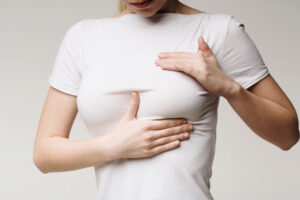
Some firmness after breast augmentation is completely normal and typically resolves on its own as your implants settle. However, if hardness persists beyond several weeks, it may be a sign of capsular contracture, a condition where scar tissue around the implant hardens abnormally. Read on to learn what causes it, how to recognize it, and how our team works to minimize your risk from the start.
If you’ve noticed that your breast implants feel firmer than expected, you’re not alone. It’s one of the most common concerns patients have after breast augmentation. The good news is that firmness is often a normal part of the healing process. However, in some cases, it can signal a condition that warrants attention. Here’s what you need to know.
What to Expect During Early Recovery
In the beginning of your recovery from breast augmentation, your implants will most likely feel firm and sit higher on the chest, but these concerns are typically temporary. Swelling during your initial recovery is also normal, and it may cause a feeling of tightness in the chest. As your body continues to heal, saline or silicone breast implants should naturally “drop” and settle into their proper position, softening throughout this process. Breast implant massage, as instructed by your plastic surgeon, can help encourage your implants to settle faster and more evenly.
When Firmness Persists: Understanding Capsular Contracture
If your breast implants still feel hard and uncomfortable after several weeks, you may have developed a condition called capsular contracture. This occurs when the scar tissue (or “capsule”) that naturally forms around any implant hardens and tightens abnormally. In over 98% of patients, the scar capsule remains thin and soft, a completely normal part of healing. However, for those who develop capsular contracture, the capsule can become abnormally rigid and compress the implant, leading to an unnatural appearance and, in some cases, significant discomfort.
Grades of Capsular Contracture
Capsular contracture is classified on a scale from Grade I to Grade IV, ranging from barely noticeable firmness to visible distortion and pain. Depending on the grade, your symptoms may be subtle, such as slight firmness, or more pronounced, including visible changes in breast shape and chronic discomfort. If you notice that your implants have become progressively harder, changed in shape, or begun to feel painful, it’s important not to wait. The best way to determine whether capsular contracture is the cause of your symptoms is to schedule an evaluation with your plastic surgeon as soon as possible.
Risk Factors and Prevention
While capsular contracture can occur in any patient, certain factors may increase the likelihood of developing it, including infection, hematoma (bleeding around the implant), implant rupture, or bacterial contamination at the time of surgery. Smoking and a history of radiation therapy may also elevate risk. That’s why choosing an experienced, board-certified plastic surgeon who takes deliberate precautionary steps is one of the most important decisions you can make.
How We Minimize Your Risk
Rather than simply meeting the standard of care, our team is committed to exceeding it. All breast augmentation surgeries are performed in a fully accredited hospital operating room, alongside board-certified anesthesiologists and nurse anesthetists. A Keller Funnel device is used during implant placement, which prevents the implant from making contact with the skin’s surface, dramatically reducing the risk of infection and biofilm formation, two known contributors to capsular contracture. Thanks to these precautions, capsular contracture and infection rates at Richmond Aesthetic Surgery are less than 1%.
Before your procedure, your surgeon will discuss what to expect during recovery and what signs to look for that may indicate a complication requiring evaluation. Ongoing communication with your care team throughout recovery is key to catching any concerns early and addressing them promptly.
For more information about what to expect after breast augmentation, please contact us today!
Editor’s note: The original version of this post was published June 22, 2021.
The post Why Do My Breast Implants Feel Hard? first appeared on Richmond Aesthetic Surgery.